Does Champagne Go Bad? How Long It Lasts, Opened and Unopened
By The Aged & Amber Spirits Team
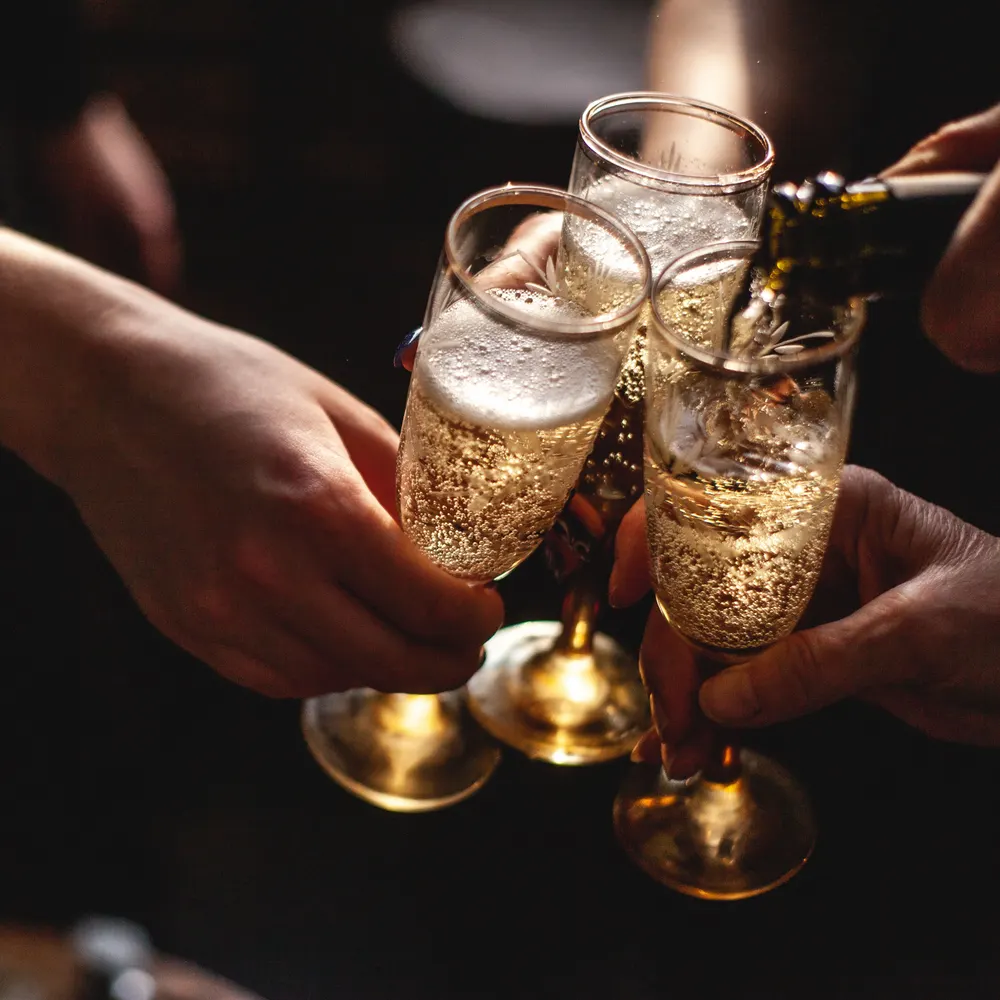
Champagne has a reputation as an occasion-only drink, which means bottles often sit in a cabinet far longer than intended — or get opened and then abandoned half-full after the toast. Here's what actually happens to Champagne over time, unopened and opened.
Unopened Non-Vintage Champagne
Most Champagne on the market is non-vintage (NV) — a blend of multiple years designed to deliver a consistent house style every time. NV Champagne is generally made to be enjoyed within 3–4 years of purchase and is already release-ready when you buy it; the producer has done the aging for you. Stored properly (on its side, in a cool, dark place, away from temperature swings), an unopened NV bottle can safely hold for several years past that window without spoiling, though it will gradually lose some of its fresh, lively character.
Unopened Vintage Champagne
Vintage Champagne — made entirely from grapes of a single exceptional year and aged longer before release — is built to improve with additional bottle age. Top vintage Champagne from producers like Dom Pérignon or Krug can continue developing positively for a decade or more past its release date when stored correctly, taking on deeper, more complex toasted, nutty, and honeyed notes.
The Real Enemy: Storage Conditions, Not Time Alone
Champagne doesn't have a hard expiration date, but poor storage accelerates decline dramatically:
- Heat and light are the biggest threats — a bottle stored upright on a sunlit counter for months will degrade far faster than one stored on its side in a dark, cool cellar.
- Temperature swings stress the cork and can let in small amounts of oxygen over time, flattening the wine prematurely.
- Upright vs. on its side: for longer-term storage, lying bottles on their side keeps the cork moist and properly sealed; for shorter-term storage (under a year), upright is fine.
Once You Open It: The Clock Speeds Up
An opened bottle of Champagne loses its carbonation within about 1–3 days, even with a proper Champagne stopper, and the flavor flattens noticeably faster than the bubbles disappear completely. For the best experience:
- Use a dedicated Champagne stopper (not just foil or a regular cork) immediately after pouring.
- Refrigerate — cold slows the loss of carbonation significantly.
- Plan to finish within 1–3 days for the best texture, and within a week at the latest before it's essentially still wine.
How to Tell If a Bottle Has Actually Gone Bad
True spoilage is rare but does happen — usually from a compromised cork letting in oxygen over a long period. Warning signs include a flat, dull straw color instead of bright gold, no fizz at all when poured, and a flat, vinegar-like, or musty smell rather than the expected toasty, fruity aroma. If it smells off, it's safest not to drink it — but a bottle that's simply lost some effervescence after being open a few extra days is not spoiled, just past its best moment.
Shop the Collection
Champagne & Sparkling Wine