What Defines Japanese Whisky? The 2021 Regulation, Explained
By The Aged & Amber Spirits Team
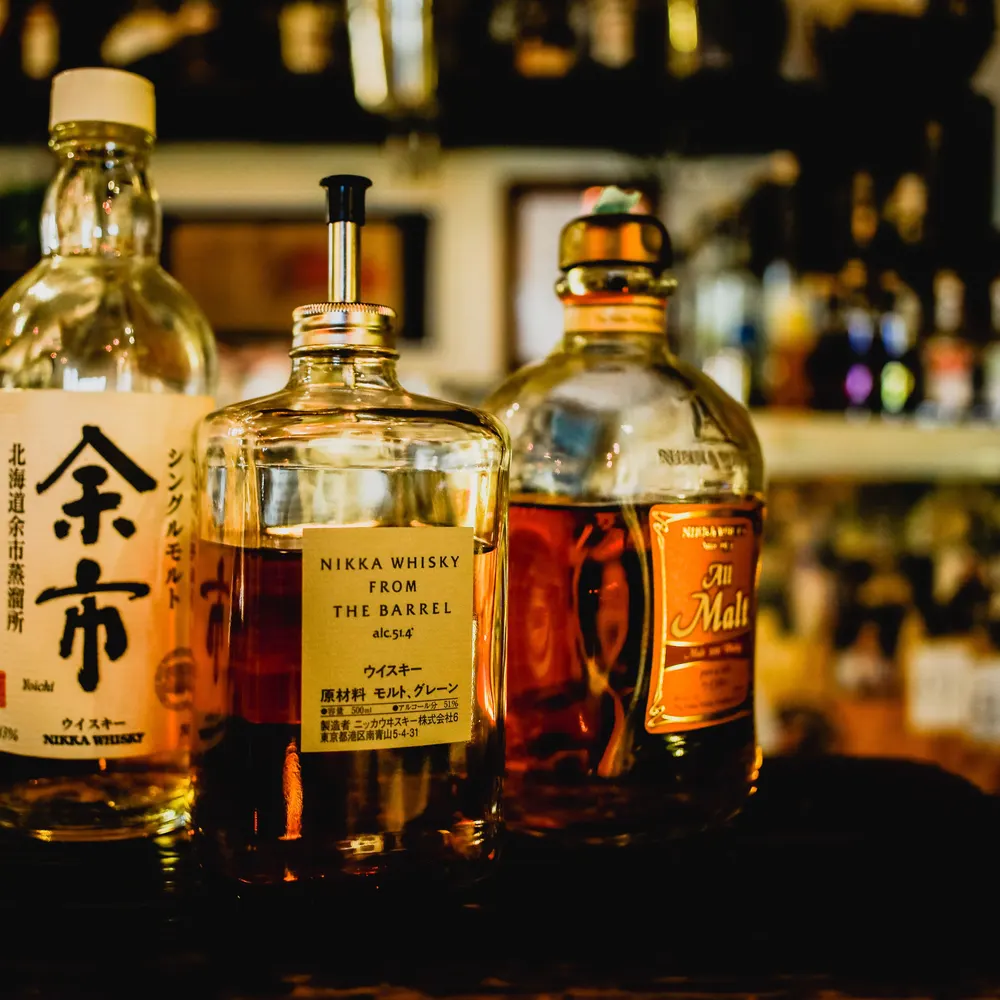
Until recently, one of the more surprising facts about Japanese whisky was that the term itself had no legally enforced definition — a gap that a 2021 industry standard set out to close.
The Historical Gap
Unlike Scotch (protected by strict UK law) or bourbon (protected by US federal regulation), "Japanese whisky" carried no mandatory legal requirements for decades. This meant a product could technically be labeled "Japanese whisky" even if it included imported bulk whisky blended or bottled in Japan, as long as it met only Japan's general, much looser liquor tax classification rules.
The 2021 Standard
In 2021, the Japan Spirits & Liqueurs Makers Association introduced a voluntary industry standard defining genuine "Japanese whisky," requiring that the product be made from malted grain (with other cereal grains permitted), mashed, fermented, and distilled at a distillery in Japan, aged in wooden casks within Japan for at least three years, and bottled in Japan.
Why "Voluntary" Matters
Crucially, the standard is not a government-enforced law the way Scotch's and bourbon's protections are — it's an industry association standard that producers can choose to adopt. Reputable major distilleries have generally aligned with it, but the lack of full legal enforcement means the protection is somewhat softer than Scotch's or bourbon's government-backed rules.
What This Means for Consumers
Products now labeled and marketed as meeting the standard offer meaningfully more assurance that what's in the bottle was genuinely produced start-to-finish in Japan, rather than potentially including a significant proportion of imported whisky. It's still worth checking whether a specific brand has explicitly adopted the standard, since adoption isn't universal or legally mandatory.
The Bigger Picture
This regulatory gap and its 2021 correction reflect Japanese whisky's relatively young formal identity compared to Scotch's centuries of established, legally protected tradition — a reminder that even a globally celebrated whisky category can still be actively defining its own rules in real time.
Shop the Collection
Japanese Whisky
Frequently Asked Questions
Related Articles
Japanese Whisky EducationNikka, Hibiki, Yamazaki, Togouchi & Mars Shinshu: A Guide to Japan's Whisky Houses
5 min readJapanese Whisky EducationIs Kavalan a Japanese Whisky? (No — Here's What It Actually Is)
3 min readJapanese Whisky Education