Who Really Owns Your Favorite Beer? A Beer Brand Ownership Guide
By The Aged & Amber Spirits Team
Walk down a beer aisle and it looks like hundreds of independent breweries competing for your attention. In reality, a handful of multinational brewing groups now own a large share of the "craft" and import brands on the shelf. Knowing who owns what doesn't make a beer taste any different, but it explains a lot about pricing, distribution, and why so many "rival" brands taste suspiciously similar.
Anheuser-Busch InBev
The world's largest brewer by volume owns Budweiser and Bud Light outright, plus a long list of acquired craft names: Goose Island, Elysian, and 10 Barrel Brewing among them. AB InBev's strategy since the early 2010s has been to buy up beloved regional craft breweries rather than compete with them directly — Goose Island's 312 Urban Wheat Ale and Elysian's Space Dust IPA both started as genuinely independent Seattle/Chicago craft beers before AB InBev acquisitions.
Molson Coors
Coors Banquet and Miller Lite both live under the same corporate roof following the 2016 merger of MillerCoors' parent companies. Molson Coors also owns Blue Moon, the Belgian-style witbier that helped popularize the style in American bars — and, more recently, has leaned into acquiring non-alcoholic and hard seltzer brands to diversify beyond traditional lager.
Constellation Brands
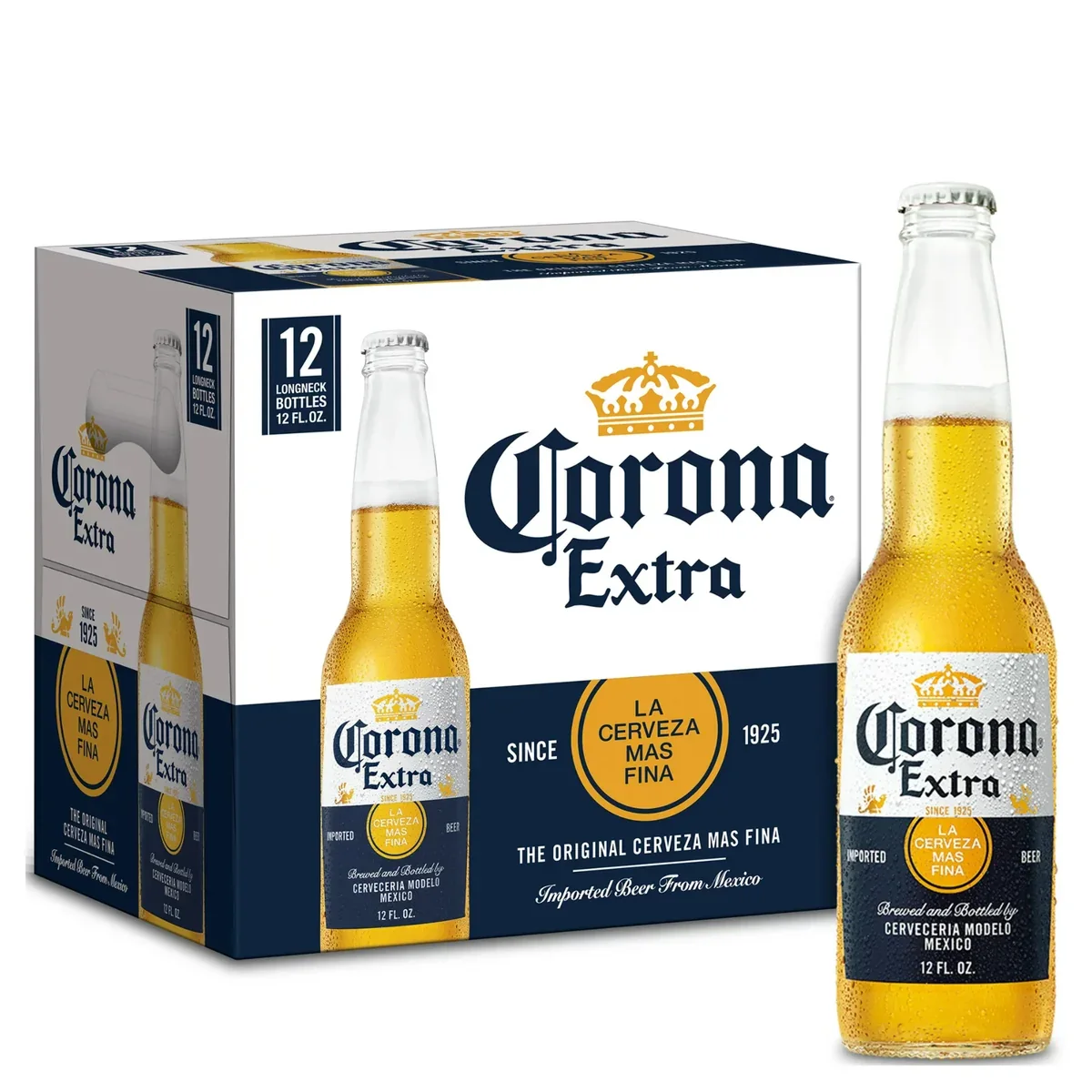
Constellation doesn't brew Corona and Modelo — Grupo Modelo does that in Mexico — but it holds the exclusive US import and marketing rights for the entire Modelo portfolio (Corona Extra, Corona Light, Modelo Especial, Pacifico, Victoria) as a condition of AB InBev's 2013 acquisition of Grupo Modelo, which required divesting the US rights to satisfy antitrust regulators.
Heineken
Heineken owns its namesake Dutch lager outright and has also acquired Lagunitas, taking full ownership of the influential Petaluma, California craft brewery by 2017 after an initial 2015 stake.
Kirin (via Lion Little World Beverages)
The Japanese brewing giant Kirin owns New Belgium (Fat Tire, the Voodoo Ranger IPA line) and Bell's (Two Hearted Ale, Oberon) through its Lion Little World Beverages subsidiary, acquiring both well-regarded American craft breweries in 2020 and 2021 respectively.
Who's Still Independent
Not every recognizable name has sold. Sierra Nevada remains fully independently and family-owned since its 1980 founding — one of the largest breweries in the country to have never sold a stake to a multinational. Yuengling, America's oldest continuously operating brewery (founded 1829), also remains independent and family-run.
Does Ownership Change the Beer?
Usually not the recipe itself, at least initially — acquiring companies generally want to preserve what made the brand successful. What does change is distribution reach (acquired brands often get wider shelf placement almost overnight), and sometimes production location, as brewing shifts to larger regional facilities for efficiency. For most drinkers, the practical takeaway is simply this: "craft" on the label doesn't guarantee independent ownership anymore, and knowing the corporate structure behind a brand can be useful information if supporting independent breweries specifically matters to you.
Shop the Collection
Beer