Japanese Whisky vs. Scotch: How Close Is the Comparison, Really?
By The Aged & Amber Spirits Team
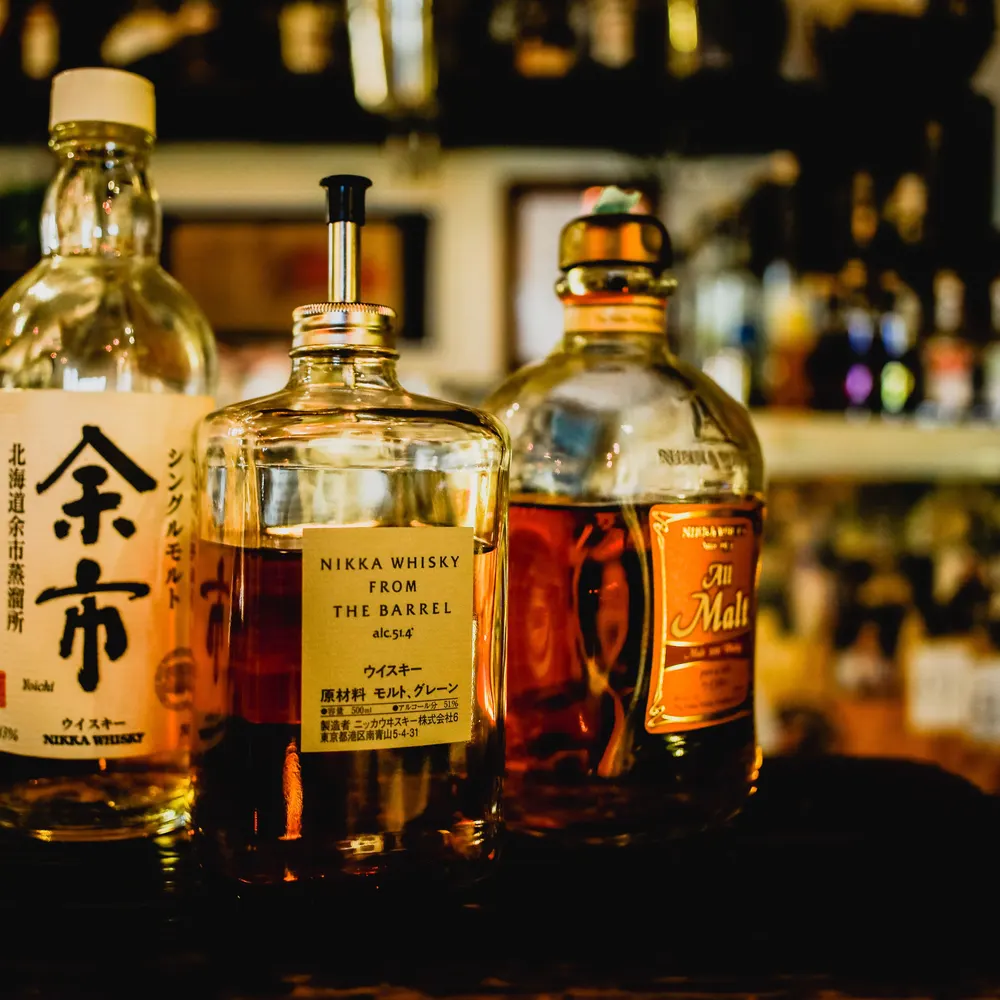
Japanese whisky is often described as "Japan's version of Scotch," and while that framing has real historical truth, the two categories have diverged meaningfully over the past century.
The Scotch-Inspired Origin
Japanese whisky's founding figures, including Masataka Taketsuru (often called the father of Japanese whisky), studied distilling in Scotland in the early 20th century before returning to Japan to help establish the country's first whisky distilleries. The production equipment, general process, and much of the early philosophy were directly modeled on Scotch methods.
Where They've Diverged
Despite the shared origin, key differences have emerged: Japanese distilleries historically traded whisky components with each other far less than Scottish distilleries do, meaning individual Japanese distilleries tend to produce a wider internal variety of still shapes and styles in-house to achieve blending complexity, rather than relying on sourcing diversity from other distilleries. Japanese whisky also generally avoids peat as heavily as classic Islay Scotch, leaning instead toward more delicate, precise, often fruit-and-floral-forward profiles, alongside meticulous attention to water quality and mizunara (Japanese oak) cask aging, which imparts a distinctive incense and sandalwood character unavailable from European or American oak.
Legal Definition Differences
Until relatively recently, "Japanese whisky" had no legally enforced definition, unlike Scotch's strict geographic and production requirements — meaning some products labeled "Japanese whisky" historically could include imported whisky blended in Japan. A 2021 voluntary industry standard from the Japan Spirits & Liqueurs Makers Association introduced stricter requirements (mandating the whisky actually be distilled, aged, and bottled in Japan) for producers who choose to adopt it, closing much of that gap with Scotch's stricter, legally enforced standard.
Flavor Comparison
Japanese whisky tends toward precision, balance, and subtlety — often described as more restrained than Scotch's broader stylistic range, which spans from delicate Speyside to intensely peated Islay. Neither is "better" broadly; Japanese whisky's reputation for meticulous craftsmanship reflects a genuinely different philosophy than Scotch's more regionally varied approach.
The Bottom Line
Japanese whisky started as a deliberate homage to Scotch, but a century of independent development — different water, different oak, different blending philosophy, and historically looser labeling rules now tightening — has produced a genuinely distinct category worth exploring on its own terms rather than purely as "Japan's Scotch."
Shop the Collection
Japanese Whisky
Frequently Asked Questions
Related Articles
Japanese Whisky EducationNikka, Hibiki, Yamazaki, Togouchi & Mars Shinshu: A Guide to Japan's Whisky Houses
5 min readJapanese Whisky EducationWhat Defines Japanese Whisky? The 2021 Regulation, Explained
4 min readJapanese Whisky Education