Blended vs. Single Malt Japanese Whisky: Which to Try First
By The Aged & Amber Spirits Team
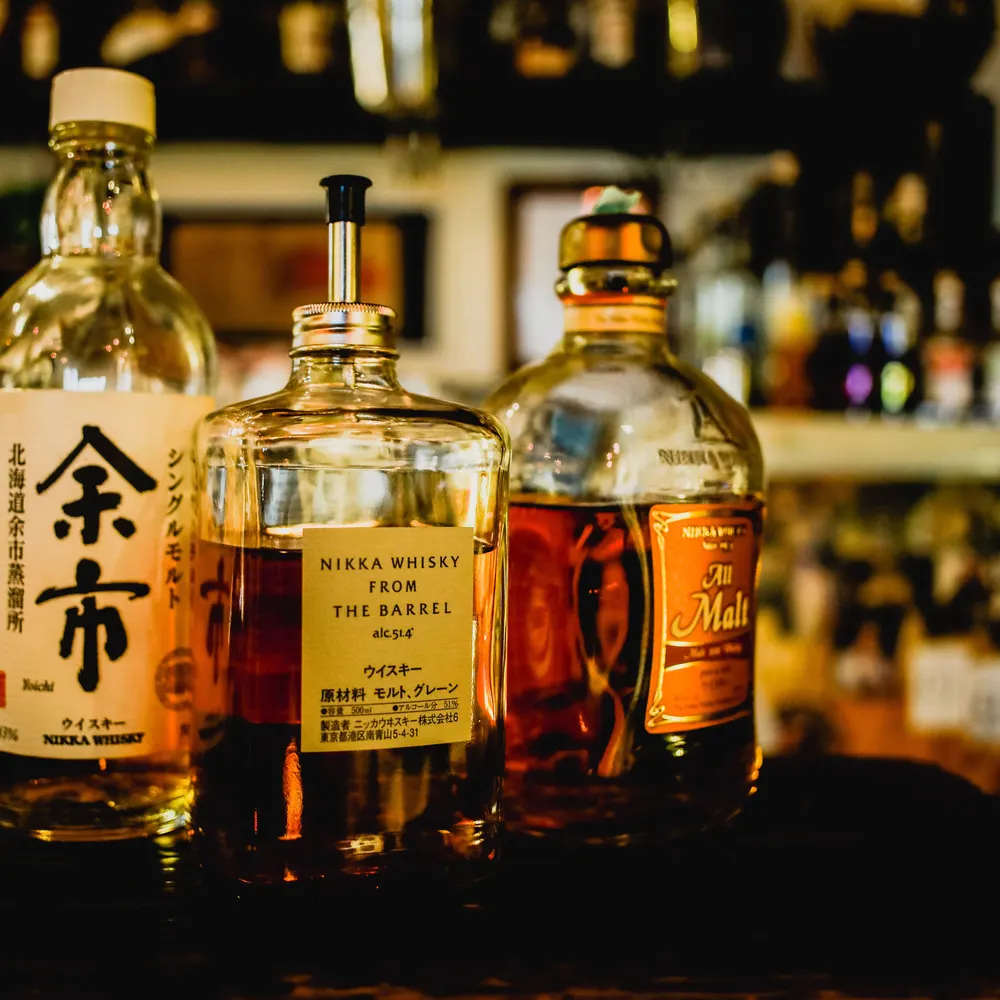
Japanese whisky's reputation was built largely on single malts, but blended whisky is still where most of the category's volume — and arguably its house style — actually lives. Knowing the difference helps you pick the right bottle for what you actually want.
Single Malt Japanese Whisky
A single malt is made entirely from malted barley, distilled in pot stills, at one single distillery. Every batch reflects that one distillery's stills, water source, and warehouse conditions, which is why single malts tend to show more distinctive, sometimes idiosyncratic character from release to release.
Blended Japanese Whisky
A blended whisky combines single malt with grain whisky (typically distilled in continuous column stills from corn or other cereals), often drawn from more than one distillery. The goal of blending is consistency and balance — smoothing out any single component's rough edges into a more approachable, repeatable whole.
The Twist That Makes Japan Different From Scotland
In Scotland, blenders routinely buy and trade whisky stock between competing distilleries — an informal but long-established practice that gives Scotch blenders a huge palette of malts and grains to draw from. Japanese producers largely don't do this. Suntory and Nikka, the country's two biggest houses, each blend almost exclusively from their own distilleries' production.
That's a real structural difference: a Japanese blend reflects one company's full range of stills and warehouses, not an open marketplace of stock the way a Scotch blend can. It's part of why major Japanese producers built multiple distilleries with deliberately different pot still shapes and production styles in the first place — effectively manufacturing their own internal diversity to blend from, since they can't easily buy it from a competitor.
Flavor and Approachability
As a rough rule:
- Blended Japanese whisky is lighter, more consistent bottle to bottle, and a gentler entry point for someone newer to Japanese whisky generally.
- Single malt Japanese whisky shows more individual character and complexity, but also more variation between releases and vintages, and typically commands a higher price given the production constraints on the malt itself.
The 2021 Rule Change That Matters for Both
As of 2021, Japan's whisky industry body requires that anything labeled "Japanese whisky" be fermented, distilled, and matured entirely within Japan, using water sourced in Japan. Before that, some products carrying Japanese branding legitimately contained imported Scotch or other foreign whisky blended in — a practice the new self-regulatory standard was designed to end. The rule applies equally to single malt and blended Japanese whisky, so either style you choose today should reflect whisky genuinely made start to finish in Japan.
Which Should You Try First?
If you want a reliable, food-friendly introduction to the category, a well-made blended Japanese whisky is the safer starting point — it's built specifically to be balanced and approachable. Once you have a sense of the house style you like, a single malt from that same producer will usually show you a sharper, more concentrated version of the same character, with more of the distillery's personality on display.
Shop the Collection
Japanese Whisky